Tuesday, January 08, 2008
Childhood Charleston 1968
Music Editor Elegantly slobby Charlestonian, recently back after 16 years in Athens, Georgia. I remember the Killer Whales, the old Sonny Goldberg ads on TV, the "Happy Raine" kids show, and the Slip-Slidin' waterslide in Mt. P. I find high-quality beer, obscure rock records, and strong coffee irresistible. I edit and write for the City Paper's music section and play drums and make noise for fun. ( T. Ballard Lesemann)

Thursday, July 26, 2007
I Love Sallie's last line.
Sallie Krawcheck, from Charleston, SC is one of the USA’s most powerful businesswomen.
Street star: Citigroup’s CFO, Sallie Krawcheck
Sallie Krawcheck tells FORTUNE's Geoffrey Colvin what it takes to be CFO of the world's largest bank. By Geoffrey Colvin, FORTUNE senior editor-at-large May 15, 2006
(FORTUNE Magazine) - To be a chief financial officer in this era of global markets, rising interest rates, and super-powerful investors is tough for sure. To be CFO of the world's largest financial institution, which is heavily exposed to all those forces - that's tough by a factor of ten.
The holder of that big job is Citigroup’s Sallie Krawcheck, whose ascent is already legendary on Wall Street though she’s just 41. Her career, while brief, has prepared her well for the challenges facing today's CFOs at a wide range of companies.
Krawcheck started out on the other side of the Wall Street relationship, grilling CFOs as a research analyst evaluating the shares of financial institutions. Consistently top ranked, she rose to become CEO of the Sanford C. Bernstein research boutique.
Because Bernstein is purely a research firm - no underwriting or investment banking - it came through the scandals of the bull market with its reputation pristine, and Krawcheck became known as Wall Street's Mrs. Clean. She even landed on the cover of FORTUNE under the headline "In Search of the Last Honest Analyst.”
When former Citigroup (Research) chief Sandy Weill wanted to clean up his tarnished Salomon Smith Barney (home of infamous telecom analyst Jack Grubman), he hired Krawcheck to be its CEO. She ran that business for two years before becoming Citigroup's CFO in November 2004.
The job includes representing Citigroup publicly - and talking tirelessly to research analysts. Krawcheck recently sat down with FORTUNE senior editor at large Geoffrey Colvin before an invited audience at the Time Warner Center in Manhattan.
They discussed, among other things, the honesty of today’s Wall Street research, why Citi’s stock has gone nowhere the past two years, what she's learned about leadership in her rapid rise, and the value of a really tough seventh grade.
Edited excerpts:
Back when you were an analyst, you had a joke that went, How do you know when management is lying? Answer: Their lips are moving. Is the joke still funny?
Sort of funny. It's a good reminder, which I give my children, to be careful what you say because it will follow you. But it was given as advice to analysts, and I would still give it. Each of us in management is at a company because we believe in the company. So I said, Don't listen to management...do your broad research and take that point of view.
You spent most of your career in research. How good is Wall Street research today?
I think there's way too much that's reporting what happened. And it's not saying what's going to happen. Research has come a good way, but there's more to do.
Is today's research honest?
I think it is. It doesn't hurt that we've had the Wall Street scandals. I think the issue for research is not honesty and independence; I think the issue is being forward-looking.
It's required under Sarbanes-Oxley and the global research settlement that the compensation of analysts be unconnected to investment banking. But the analysts know what the interests of the firm are. Even without anything being said, might they not perceive that there's still an incentive to do the research that caused all the trouble?
Well, it's true. I saw a survey years ago - but it hasn't changed - saying the most important factor when a corporation is choosing an investment bank is the research analyst and the research. And as a CFO, I can understand that. But you can look at the greater percentage of sell recommendations on the Street right now - you can look at these objective measures and say yes, the research analysts are more independent. It's in their interests and the economic interests of Wall Street for the research to be independent.
In the scandals of the past few years a lot of CFOs have turned out to be not too good. Are the incentives different today from what they used to be?
It's very easy to see how a CFO can be tempted. I've seen it. It is much easier to deliver good news to the Street rather than bad news. As a CFO one has to have the strength of character, the thickness of skin, to be able to deliver bad news as easy as good news.
We've taken a lot of steps to remove as much of the temptation as we can. A lot of decisions have to be made by the CFO and the CEO. Things like our loss reserves, our incentive compensation accruals, our legal accruals [have been] pulled back from the end of the fourth quarter. So even if I think, "Boy, I'm fine missing consensus," we've pulled those decisions back before we know what those numbers are going to be, so we make the right decision for the company.
I think a lot of it has to be done at the top. I have to let my CEO know every step of the way when I talk to him that it's okay to deliver bad news. We want bad news. Numbers don't lie. See what the numbers tell you, and you have to be just as comfortable delivering bad news as good.
Which is why I'm glad I was an analyst. I always knew that if my stock tips were going to work...I should be uncomfortable. It was probably not the right place to be if everybody said, "Way to go, good recommendation." As an analyst, I was very comfortable being uncomfortable, and as a CFO I have to be comfortable being uncomfortable. I have to be fine with delivering bad news.
When you say "comfortable being uncomfortable" as an analyst, do you mean making calls that weren't in the mainstream?
That's correct. One had to make contrarian calls. There were calls I made that had people saying, "You're nuts, you're nuts." [CNBC's] Jim Cramer on TV said I was not that smart. You just have to say, Okay, that's fine.
Back in the '90s?
Back in the '90s. At a point in time I didn't respect his opinion.
What do you think of his current show?
I don't watch a lot of TV.
With the Enron trial underway, I'm wondering about your view as a CFO. If a CFO were doing something egregiously illegal, would it be reasonable to think that the CEO wouldn't know?
I think that would be a CEO who's not asking the right questions. Is it theoretically possible? Absolutely. But there are reasons that my office is steps away from [Citigroup CEO Charles Prince's] office. There's a reason that I see him more than I do my family members. We are in and out of each other's offices all day, and what I consider a big part of my job is delivering bad news. I deliver bad news to Chuck all the time, and I have to say this, he's outstanding - he takes it, he absorbs it.
Citigroup stock has gone nowhere the past two years, yet the market is up over 15%. What's the problem?
The problem in a nutshell is that last year we did not deliver earnings growth. I believe very strongly that we've been doing the right things at Citigroup. I believe we've been allocating our capital more efficiently, more stringently, more aggressively.
We sold off businesses that were not better as part of Citigroup: the asset management business and the life insurance and annuity business. We've tackled the ethics issues absolutely head on. We have embarked on an investment program that will take advantage of the globality of Citigroup to aggressively grow overseas.
What kind of opportunity is China for you?
China, I think, is what we call a longer term opportunity. As we look at investment opportunities, there are opportunities that will pay off today, and those that will pay off in five years, and those that, when my daughter is CFO of Citigroup, or my granddaughter, they'll say, "Hey, Mommy, glad you did that."
Citigroup lends people billions of dollars through credit cards, mortgages, and other loans. Personal debt in the U.S. is off the charts, and the personal savings rate has gone negative. Is this incredible debt binge eventually going to be bad news for Citi, and is it going to be bad news for America?
Clearly, more debt is bad. But servicing that debt isn't costing consumers too much because interest rates have gone down. People were quite worried about some of these exotic mortgage loans for lower-income customers - we try to stay out of that market.
On a macro basis, I think consumers are acting pretty rationally. On credit cards, payment rates are close to all-time highs. And consumers are transitioning their borrowing into home equity loans, going from a higher cost loan to a lower-cost loan. They're paying us back. The consumer doesn't seem stretched. I wouldn't bet against U.S. consumers. They're pretty rational folks.
But rates are going up from here, not down. And the value of the homes people need to secure those loans is probably going to stop rising and may decline. Are people going to find themselves in serious trouble?
It could be. Not to say it won't happen, but we haven't had a synchronous U.S. housing market decline in as long as anyone can remember. If you have everything go wrong at once, certainly the U.S. consumer would be in trouble. But again, we worry more about irrational loans being made to customers who might not understand them. Those are the types of loans we would make only to sophisticated customers ... who could understand them.
About your career. You graduated from the University of North Carolina, then worked at Salomon Brothers for a few years, then got your MBA at Columbia. You've said that everyone makes one false step coming out of business school. What was yours?
I tried to get a job in marketing, which didn't work, so I went right back into investment banking. As a young investment banker I became very happily and joyfully pregnant. But rather than doing what I would advise doing, what any young lady would do - working out the hours, figuring out if you're going to go to another department - I quit. Full-out quit.
It took me about two weeks to realize that I didn't mean to quit. I tried to interview and go back on Wall Street when I was very pregnant. That didn't work. The great thing about it is that during that year off, I figured out I wanted to be a research analyst.
So, two lessons from the experience. One, if I hadn't taken the time to think about it, I wouldn't have found the right path. And two, you can try to kill a career, but if you're persistent to get back in, there may not be any such thing as career suicide.
So you eventually became a research analyst at Sanford C. Bernstein, which is largely a solitary job, and went from that to being head of research and then CEO. What was the most important element in making that change?
To be a successful analyst, you have to have a healthy ego. You have to embrace the spotlight and say, It's okay for me to be out there and make mistakes. The job of managing the business was very different - a lot of people stumble during the transition because you have to move from "It's all about me" to "It's all about you." And that was a very conscious decision that I had to make.
But I have to tell you that aside from that one issue, being a research analyst is terrific preparation for being a manager. You have to make a lot of decisions, and every day the market tells you whether you're right or wrong. You do it publicly.
The first time I made a mistake in print...I started to blame my research director, and then I realized, No, this was my mistake. It's a very good rhythm to get used to, because when you're transitioning into management, trying to make strategic decisions, you're used to making your own decisions.
You are at Bernstein, and your assistant says Sandy Weill is on the phone, this guy you had made angry because of what you said when you were covering his company. Now he wants to offer you the job of running Smith Barney. Were you prepared for it?
No. Although I always hate the stories people tell - that when he called, I said, "Oh, no, Sandy, not me!" I didn't say that. I thought he was going to offer me the job of research chief, and I was going to say no. At Bernstein I had the greatest research perch on the Street at the time. But working at Smith Barney, given the organization and the challenges, was irresistible.
So other career advice I give to folks is that if you have a stretch assignment, just take it.
You are talked about as a possible future CEO of Citigroup, and Chuck Prince has said that. Is it a job that appeals to you?
I have never plotted my career. And I have to tell you this, if I think about it now, I can't work one minute longer or one minute harder. The CFO job completes me. And I tell you the truth, I think that Chuck is doing an excellent job as CEO.
Few women have risen to high posts on Wall Street. It's an aggressively male environment. Is it an advantage or a disadvantage to be a woman in that world?
I think it's an advantage. I grew up in Charleston, a very genteel, very Southern city, a gorgeous city. I will say there’s something about going to an all-girls school in Charleston that's tougher than Wall Street. You don't know what it’s like. I had the glasses, the braces, the corrective shoes. I was half-Jewish, half-WASPy. I couldn't have been further outcast. There was nothing they could do to me at Salomon Brothers in the '80s that was worse than the seventh grade.
Street star: Citigroup’s CFO, Sallie Krawcheck
Sallie Krawcheck tells FORTUNE's Geoffrey Colvin what it takes to be CFO of the world's largest bank. By Geoffrey Colvin, FORTUNE senior editor-at-large May 15, 2006
(FORTUNE Magazine) - To be a chief financial officer in this era of global markets, rising interest rates, and super-powerful investors is tough for sure. To be CFO of the world's largest financial institution, which is heavily exposed to all those forces - that's tough by a factor of ten.
The holder of that big job is Citigroup’s Sallie Krawcheck, whose ascent is already legendary on Wall Street though she’s just 41. Her career, while brief, has prepared her well for the challenges facing today's CFOs at a wide range of companies.
Krawcheck started out on the other side of the Wall Street relationship, grilling CFOs as a research analyst evaluating the shares of financial institutions. Consistently top ranked, she rose to become CEO of the Sanford C. Bernstein research boutique.
Because Bernstein is purely a research firm - no underwriting or investment banking - it came through the scandals of the bull market with its reputation pristine, and Krawcheck became known as Wall Street's Mrs. Clean. She even landed on the cover of FORTUNE under the headline "In Search of the Last Honest Analyst.”
When former Citigroup (Research) chief Sandy Weill wanted to clean up his tarnished Salomon Smith Barney (home of infamous telecom analyst Jack Grubman), he hired Krawcheck to be its CEO. She ran that business for two years before becoming Citigroup's CFO in November 2004.
The job includes representing Citigroup publicly - and talking tirelessly to research analysts. Krawcheck recently sat down with FORTUNE senior editor at large Geoffrey Colvin before an invited audience at the Time Warner Center in Manhattan.
They discussed, among other things, the honesty of today’s Wall Street research, why Citi’s stock has gone nowhere the past two years, what she's learned about leadership in her rapid rise, and the value of a really tough seventh grade.
Edited excerpts:
Back when you were an analyst, you had a joke that went, How do you know when management is lying? Answer: Their lips are moving. Is the joke still funny?
Sort of funny. It's a good reminder, which I give my children, to be careful what you say because it will follow you. But it was given as advice to analysts, and I would still give it. Each of us in management is at a company because we believe in the company. So I said, Don't listen to management...do your broad research and take that point of view.
You spent most of your career in research. How good is Wall Street research today?
I think there's way too much that's reporting what happened. And it's not saying what's going to happen. Research has come a good way, but there's more to do.
Is today's research honest?
I think it is. It doesn't hurt that we've had the Wall Street scandals. I think the issue for research is not honesty and independence; I think the issue is being forward-looking.
It's required under Sarbanes-Oxley and the global research settlement that the compensation of analysts be unconnected to investment banking. But the analysts know what the interests of the firm are. Even without anything being said, might they not perceive that there's still an incentive to do the research that caused all the trouble?
Well, it's true. I saw a survey years ago - but it hasn't changed - saying the most important factor when a corporation is choosing an investment bank is the research analyst and the research. And as a CFO, I can understand that. But you can look at the greater percentage of sell recommendations on the Street right now - you can look at these objective measures and say yes, the research analysts are more independent. It's in their interests and the economic interests of Wall Street for the research to be independent.
In the scandals of the past few years a lot of CFOs have turned out to be not too good. Are the incentives different today from what they used to be?
It's very easy to see how a CFO can be tempted. I've seen it. It is much easier to deliver good news to the Street rather than bad news. As a CFO one has to have the strength of character, the thickness of skin, to be able to deliver bad news as easy as good news.
We've taken a lot of steps to remove as much of the temptation as we can. A lot of decisions have to be made by the CFO and the CEO. Things like our loss reserves, our incentive compensation accruals, our legal accruals [have been] pulled back from the end of the fourth quarter. So even if I think, "Boy, I'm fine missing consensus," we've pulled those decisions back before we know what those numbers are going to be, so we make the right decision for the company.
I think a lot of it has to be done at the top. I have to let my CEO know every step of the way when I talk to him that it's okay to deliver bad news. We want bad news. Numbers don't lie. See what the numbers tell you, and you have to be just as comfortable delivering bad news as good.
Which is why I'm glad I was an analyst. I always knew that if my stock tips were going to work...I should be uncomfortable. It was probably not the right place to be if everybody said, "Way to go, good recommendation." As an analyst, I was very comfortable being uncomfortable, and as a CFO I have to be comfortable being uncomfortable. I have to be fine with delivering bad news.
When you say "comfortable being uncomfortable" as an analyst, do you mean making calls that weren't in the mainstream?
That's correct. One had to make contrarian calls. There were calls I made that had people saying, "You're nuts, you're nuts." [CNBC's] Jim Cramer on TV said I was not that smart. You just have to say, Okay, that's fine.
Back in the '90s?
Back in the '90s. At a point in time I didn't respect his opinion.
What do you think of his current show?
I don't watch a lot of TV.
With the Enron trial underway, I'm wondering about your view as a CFO. If a CFO were doing something egregiously illegal, would it be reasonable to think that the CEO wouldn't know?
I think that would be a CEO who's not asking the right questions. Is it theoretically possible? Absolutely. But there are reasons that my office is steps away from [Citigroup CEO Charles Prince's] office. There's a reason that I see him more than I do my family members. We are in and out of each other's offices all day, and what I consider a big part of my job is delivering bad news. I deliver bad news to Chuck all the time, and I have to say this, he's outstanding - he takes it, he absorbs it.
Citigroup stock has gone nowhere the past two years, yet the market is up over 15%. What's the problem?
The problem in a nutshell is that last year we did not deliver earnings growth. I believe very strongly that we've been doing the right things at Citigroup. I believe we've been allocating our capital more efficiently, more stringently, more aggressively.
We sold off businesses that were not better as part of Citigroup: the asset management business and the life insurance and annuity business. We've tackled the ethics issues absolutely head on. We have embarked on an investment program that will take advantage of the globality of Citigroup to aggressively grow overseas.
What kind of opportunity is China for you?
China, I think, is what we call a longer term opportunity. As we look at investment opportunities, there are opportunities that will pay off today, and those that will pay off in five years, and those that, when my daughter is CFO of Citigroup, or my granddaughter, they'll say, "Hey, Mommy, glad you did that."
Citigroup lends people billions of dollars through credit cards, mortgages, and other loans. Personal debt in the U.S. is off the charts, and the personal savings rate has gone negative. Is this incredible debt binge eventually going to be bad news for Citi, and is it going to be bad news for America?
Clearly, more debt is bad. But servicing that debt isn't costing consumers too much because interest rates have gone down. People were quite worried about some of these exotic mortgage loans for lower-income customers - we try to stay out of that market.
On a macro basis, I think consumers are acting pretty rationally. On credit cards, payment rates are close to all-time highs. And consumers are transitioning their borrowing into home equity loans, going from a higher cost loan to a lower-cost loan. They're paying us back. The consumer doesn't seem stretched. I wouldn't bet against U.S. consumers. They're pretty rational folks.
But rates are going up from here, not down. And the value of the homes people need to secure those loans is probably going to stop rising and may decline. Are people going to find themselves in serious trouble?
It could be. Not to say it won't happen, but we haven't had a synchronous U.S. housing market decline in as long as anyone can remember. If you have everything go wrong at once, certainly the U.S. consumer would be in trouble. But again, we worry more about irrational loans being made to customers who might not understand them. Those are the types of loans we would make only to sophisticated customers ... who could understand them.
About your career. You graduated from the University of North Carolina, then worked at Salomon Brothers for a few years, then got your MBA at Columbia. You've said that everyone makes one false step coming out of business school. What was yours?
I tried to get a job in marketing, which didn't work, so I went right back into investment banking. As a young investment banker I became very happily and joyfully pregnant. But rather than doing what I would advise doing, what any young lady would do - working out the hours, figuring out if you're going to go to another department - I quit. Full-out quit.
It took me about two weeks to realize that I didn't mean to quit. I tried to interview and go back on Wall Street when I was very pregnant. That didn't work. The great thing about it is that during that year off, I figured out I wanted to be a research analyst.
So, two lessons from the experience. One, if I hadn't taken the time to think about it, I wouldn't have found the right path. And two, you can try to kill a career, but if you're persistent to get back in, there may not be any such thing as career suicide.
So you eventually became a research analyst at Sanford C. Bernstein, which is largely a solitary job, and went from that to being head of research and then CEO. What was the most important element in making that change?
To be a successful analyst, you have to have a healthy ego. You have to embrace the spotlight and say, It's okay for me to be out there and make mistakes. The job of managing the business was very different - a lot of people stumble during the transition because you have to move from "It's all about me" to "It's all about you." And that was a very conscious decision that I had to make.
But I have to tell you that aside from that one issue, being a research analyst is terrific preparation for being a manager. You have to make a lot of decisions, and every day the market tells you whether you're right or wrong. You do it publicly.
The first time I made a mistake in print...I started to blame my research director, and then I realized, No, this was my mistake. It's a very good rhythm to get used to, because when you're transitioning into management, trying to make strategic decisions, you're used to making your own decisions.
You are at Bernstein, and your assistant says Sandy Weill is on the phone, this guy you had made angry because of what you said when you were covering his company. Now he wants to offer you the job of running Smith Barney. Were you prepared for it?
No. Although I always hate the stories people tell - that when he called, I said, "Oh, no, Sandy, not me!" I didn't say that. I thought he was going to offer me the job of research chief, and I was going to say no. At Bernstein I had the greatest research perch on the Street at the time. But working at Smith Barney, given the organization and the challenges, was irresistible.
So other career advice I give to folks is that if you have a stretch assignment, just take it.
You are talked about as a possible future CEO of Citigroup, and Chuck Prince has said that. Is it a job that appeals to you?
I have never plotted my career. And I have to tell you this, if I think about it now, I can't work one minute longer or one minute harder. The CFO job completes me. And I tell you the truth, I think that Chuck is doing an excellent job as CEO.
Few women have risen to high posts on Wall Street. It's an aggressively male environment. Is it an advantage or a disadvantage to be a woman in that world?
I think it's an advantage. I grew up in Charleston, a very genteel, very Southern city, a gorgeous city. I will say there’s something about going to an all-girls school in Charleston that's tougher than Wall Street. You don't know what it’s like. I had the glasses, the braces, the corrective shoes. I was half-Jewish, half-WASPy. I couldn't have been further outcast. There was nothing they could do to me at Salomon Brothers in the '80s that was worse than the seventh grade.
Monday, July 23, 2007
Wednesday, May 23, 2007
Meeting Street by Stephen Shore 1975

Charleston South Carolina Meeting Street August 1975 Currently the location of Charleston Place
Friday, May 18, 2007
Garden and Gun Club
Old memory: (Lifted from text from a new magazine in Charleston)
In the old JC Penny building that was on King Street and Market in Charleston (where the Charleston Place Hotel sits now) was a place called The Garden & Gun Club.
The Garden & Gun Club was a gay bar where everybody ... movers, shakers, partyers, hipsters, social mavens ... drank and danced from the late 1970s to the mid-1980s.
The Garden & Gun Club was progressive in that it was the first real gay bar where gay people could feel comfortable in large numbers, I'm told. It was famous throughout South Carolina, although few people outside Charleston still remember it. Charlestonians remember it fondly as the spot where everybody ... gay and straight ... converged. Anyway, two readers called wanting to know where to get the premier issue (on newstands now) and how to subscribe. Do I get a free trip to Cuba or something for this?
(Garden & Gun magazine's premier issue. The mag bears no resemblance to the late, great gay dance club, the Garden & Gun Club, in Charleston.)
In the old JC Penny building that was on King Street and Market in Charleston (where the Charleston Place Hotel sits now) was a place called The Garden & Gun Club.
The Garden & Gun Club was a gay bar where everybody ... movers, shakers, partyers, hipsters, social mavens ... drank and danced from the late 1970s to the mid-1980s.
The Garden & Gun Club was progressive in that it was the first real gay bar where gay people could feel comfortable in large numbers, I'm told. It was famous throughout South Carolina, although few people outside Charleston still remember it. Charlestonians remember it fondly as the spot where everybody ... gay and straight ... converged. Anyway, two readers called wanting to know where to get the premier issue (on newstands now) and how to subscribe. Do I get a free trip to Cuba or something for this?
(Garden & Gun magazine's premier issue. The mag bears no resemblance to the late, great gay dance club, the Garden & Gun Club, in Charleston.)
Monday, February 19, 2007
Wednesday, January 03, 2007
Wednesday, December 20, 2006
Midnight Train to Georgia

Lyrics to "Midnight Train To Georgia"
Pips Included
(As recorded by Gladys Knight & The Pips)
JIM WEATHERLY
hmmm, L.A.
proooooved too much for the man
too much for the man - he couldn't make it
So he's leavin' the life, hmm
he's come to knoooow, ooo
he said he's goin'
He said he's goin' back to find
goin' back to find
ooo ooo ooo-what's left of his world
The world he left behind
not so looong ago o o o o o o hhhh
He's leavin'
leavin'
on that midnight train to Georgia
leavin' on a midnight train
hmm, yeah
Said he's goin' back
goin' back to find
to a simpler place in time
to find the simpler place and time
and she's gonna be right by his side
oh yes he his
'N---I'll be with him
I know you will
on that midnight train to Georgia
leavin' on a midnight train
ayyy heh heh heh heh
woo hoo hoo
http://www2.blogger.com/img/gl.italic.gif
I'd rather live in his world
than live without him in mine
myworld
I'd rather live in his world
my world is his - his and hers alone
He kept dreamin'
dreamin'
oooh that someday, he'd be a star
a super-star, but he didn't get faar
But he sho' found out the hard way,
that dreaaams don't always come true
dreams don't always come true uhn hun,
no
uhn, huh
So he's pawned all his hopes
woo hoo hoo hoo
and he even so-ho-oh-oh-ld his own car
(higher pitch) woo hoo hoo hoo
Bought a one-way ticket back,
to the life,
he once knew
oh yes he did, he said he wouldhttp://www2.blogger.com/img/gl.italic.gif
Oh oh,
he's leavin'
leavin'
ooon that midnight train to Georgia
leavin' on a Midnight Train
hmm, yeah
Said he's goin' back to find
goin' back to find
Ooh - - - a simpler place and time
yes she's gonna be right by his-side
N'-I'm gonna be with him
I know you will
oooon that midnight train to Georgia
leavin' on a Midnight Train to Georgiaaaaa - whohooo
I'd rather live in his world
live in his world
than live without him, in mine
My world is his - his and hers alone
Oooohhhh he's leavin'
Leavin'
on the midnight train to Georgia
Leavin' on the midnight train
Yeah, ohh y'all
Said he's goin' back to find
goin' back to find
oooohhh the simpler place and time
Guess who's gonna be right by his-side
I've got to be with him
I know you will
oooooon that midnight train to Georgia
Leavin' on a midnight train - woo hoo
HeyyyHey hey hey, I'd rather live in his world than live without him, in mine
Her world is his - his and hers alone
Hey Hey Hey
One Love
Gonna Board
Gotta Board
Gonna Love
Gonna Board
Gonna midnight train and ride
All aboard, all aboard, all aboard
All aboard, all aboard, all aboard
My world his world
Mine and his alone
I got to go
I got to go
I got to go
hey
I got to go
I got to go
I got to go
My world, his world, my man, his girl
(c) Copyright 1971, 1973 by Keca Music, Inc. International copyright secured.
All rights reserved.
- SONG HITS, Summer 1974.
Monday, December 18, 2006
Walk Japan
Total Inspiration!
Kintaro Walks Japan is the meticulously filmed and edited story of Tyler MacNiven's 2,000 mile trek from the bottom of Japan to the very top. His five-month odyssey was meant to impress a girl and to find his American father's Japanese birthplace. Tyler arm wrestled 100-year old ladies, dodged trains in tunnels and walked into the hearts of the Japanese people, quickly becoming a celebrity.
http://kintarowalksjapan.com/
http://en.wikipedia.org/wiki/Kintaro
Sunday, December 10, 2006
Monday, November 20, 2006
Great Memory
“Itchy” Sonenshine, b. 1921, Charleston, S.C. : My father had a sense of humor that was really something else. I don’t know if you heard this story, but if you asked him how business was he would tell you in Yiddish, “Heint hab ich nit gesprochen ein wort English,” which means, “I haven’t spoken the first word of English yet today.” He hadn’t had a customer.
Sunday, October 29, 2006
Anne Frank

When you are unhappy think about Anne Frank. She had an amazing soul and was a gifted young writer with buckets and buckets of hope. Her life was short and her purpose was not to live long enough so that she could inspire millions.

Thursday, September 14, 2006
More Cheech
My sister is visiting and we were driving in the car and out of nowhere, she starts to sing:
"Mamma tried to sock it to me tell me how to live,"
duh nun nuh, duh nun nuh, dunt, dunt, dunt.
"But I could not listen, coz my head is like a sieve"
duh nun nuh, duh nun nuh, dunt, dunt, dunt.
Cheech and Chong
I was laughing SO HARD. I had to look this up and it is from a bit called Earache My Eye.
The correct lyrics are:
EARACHE MY EYE
My momma socks it to me
Trying to tell me how to live
But I don't listen to her
'Cause my head in like a sieve
My daddy kicked me out
'Cause I wear my sister's clothes
He caught me in the bathroom
With a pair of panty hose
Check it!
"Mamma tried to sock it to me tell me how to live,"
duh nun nuh, duh nun nuh, dunt, dunt, dunt.
"But I could not listen, coz my head is like a sieve"
duh nun nuh, duh nun nuh, dunt, dunt, dunt.
Cheech and Chong
I was laughing SO HARD. I had to look this up and it is from a bit called Earache My Eye.
The correct lyrics are:
EARACHE MY EYE
My momma socks it to me
Trying to tell me how to live
But I don't listen to her
'Cause my head in like a sieve
My daddy kicked me out
'Cause I wear my sister's clothes
He caught me in the bathroom
With a pair of panty hose
Check it!
Sunday, September 03, 2006
I still miss the World Trade Center

Thought about this song at the same time.
Words are flowing out like endless rain into a paper cup
They slither while they pass they slip away across the Universe.
Pools of sorrow, waves of joy are drifting through my opened mind
Possessing and caressing me.
Jai Guru Deva Om.
Chorus:
Nothing's gonna change my world,
Nothing's gonna change my world.
Nothing's gonna change my world,
Nothing's gonna change my world.
Images of broken light which dance before me like a million eyes
They call me on and on across the Universe.
Thoughts meander like a restless wind inside a letterbox
They tumble blindly as they make their way across the Universe.
Jai Guru Deva Om.
Chorus.
Sounds of laughter, shades of earth are ringing through my opened ears
Inciting and inviting me.
Limitless undying love which shines around me like a million suns
And calls me on and on across the Universe.
Jai Guru Deva Om.
Chorus.
Jai Guru Deva.
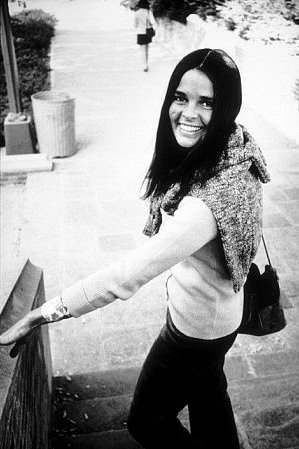
Ali McGraw

Ok, oh my goodness. Scott and I were going to see the movie World Trade Center, which by the way will be a heartbreaker of course. We had made dinner and were going to go to an early show and did not want to rush to finish eating. We had already checked out Love Story, the famous 1970 tear-jerker of another kind. It's a very well written story by Erich Segal.
What blew me away was Ali McGraw. Wow, wow what a true beauty. Today, she is 67 years old! I remember when my own grandmother was 67! Anyhow, I am having a hard time with the fact that she made that film in 1970. I was 9 years old (NINE!) at the time the movie came out and everyone was talking about the "Ali McGraw Hat"


Thursday, August 31, 2006
What The BLEEP Do We Know!?
I saw the movie What The BLEEP Do We know!? and it really blew my mind. We know these things but this film puts it in an interesting perspective.
I Create My Day
I'm taking this time to create my day and I'm infecting the quantum field. Now if the observer is watching me the whole time that I'm doing this and there is a spiritual aspect to myself, then show me a sign today that you paid attention to any one of these things that I created, and bring them in a way that I won't expect, so I'm as surprised at my ability to be able to experience these things. And make it so that I have no doubt that it's come from you.
Dr. Joe Dispenza in What the BLEEP Do We Know!?TM
I Create My Day
I'm taking this time to create my day and I'm infecting the quantum field. Now if the observer is watching me the whole time that I'm doing this and there is a spiritual aspect to myself, then show me a sign today that you paid attention to any one of these things that I created, and bring them in a way that I won't expect, so I'm as surprised at my ability to be able to experience these things. And make it so that I have no doubt that it's come from you.
Dr. Joe Dispenza in What the BLEEP Do We Know!?TM
Sunday, August 27, 2006

Saturday, August 12, 2006
Steely Dan - AJA

And while I am on the topic of the 1970s. Gander at the cover of AJA by Steely Dan. Listen to this album; blows away most music today. Someone commented on iTunes that you are not getting older, today's music is getting worse in that this is a beautifully crafted group of songs. The album AJA by Steely Dan is mesmerizing, haunting and beautiful. Still.
Friday, August 11, 2006
Cheech and Chong, 1970s Humor
Ok, here is today's very scary and funny random thought (I don't know what it is with my memories and the 1970s lately)
"No stems or seeds that you don't need, Acapulco Gold is some, ...... (inhale, pop) bad ass weeeed."
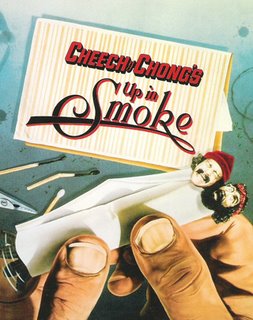
I love this song from Up In Smoke for some reason. Maybe because it was one of the funniest movies of my teen years. I just remember laughing VERY HARD. I also laughed at Cheech and Chong's other films (I'd have to look them up). And while we are on the subject of "weed" as they call it now in the My Space age (not pot) as we did in the 70s...What is unbelieveable to me are how many successful millionaires there are who spent their high school years in a foggy drugged up haze. I say, WHY STUDY? I should have enjoyed drugs more in high school. Nonetheless, I need to review what I did wrong. Maybe Sarah Silverman might be able to tell me.
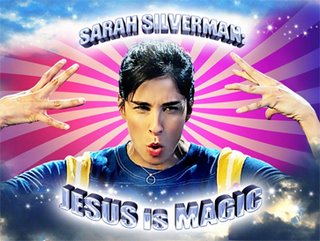
"No stems or seeds that you don't need, Acapulco Gold is some, ...... (inhale, pop) bad ass weeeed."

I love this song from Up In Smoke for some reason. Maybe because it was one of the funniest movies of my teen years. I just remember laughing VERY HARD. I also laughed at Cheech and Chong's other films (I'd have to look them up). And while we are on the subject of "weed" as they call it now in the My Space age (not pot) as we did in the 70s...What is unbelieveable to me are how many successful millionaires there are who spent their high school years in a foggy drugged up haze. I say, WHY STUDY? I should have enjoyed drugs more in high school. Nonetheless, I need to review what I did wrong. Maybe Sarah Silverman might be able to tell me.

Wednesday, August 02, 2006
Do You Feel Like We Do? Peter Frampton
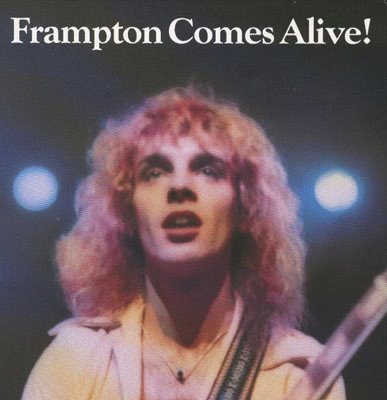
Heard this on the radio last night in the car. Wow. The long version where he sounds like a guitar. 1978. All over again. "Woke up this mornin' with a wine glass in my hand. Whose wine? What wine? Where the hell did I dine?
Subscribe to:
Posts (Atom)